A Guide to Dementia-Friendly Activities
Watching a loved one grapple with memory loss is one of the most challenging experiences a family can face. As dementia progresses, the dynamic between you and your family member changes. Communication becomes harder, and the shared activities that once brought you together might no longer be feasible. This often leads to feelings of isolation for the person with dementia and a sense of helplessness for the caregiver. However, a diagnosis does not mean the end of joy, connection, or engagement. It simply requires a shift in perspective. Instead of focusing on what has been lost, the goal is to find new ways to connect. Take a look at our guide to dementia-friendly activities and learn more about how they can help boost senior engagement.
What Are Dementia-Friendly Activities?
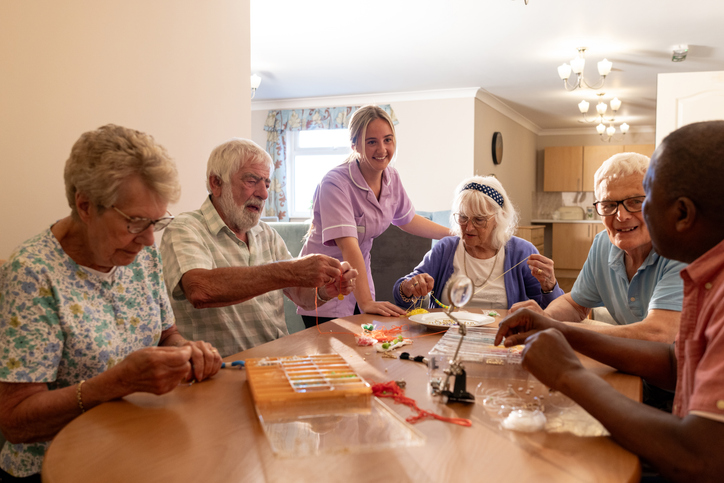
Dementia-friendly activities are any tasks, hobbies, or interactions specifically adapted to the cognitive and physical abilities of someone living with dementia. Many of them do more than just fill time. They’re therapeutic tools designed to provide a sense of purpose, accomplishment, and pleasure. The core element of these cognitive activities is that no one can “fail” them. There is no right or wrong way to do things—the goal is simply senior engagement.
Know the Features of Dementia-Friendly Activities
If you already provide dementia care to a loved one, you might already know what to expect from cognitive activities. The most effective options usually have these characteristics:
Focus on the Process, Not the Outcome
For someone with dementia, the value lies in the doing, not in how well they do it. The sensation of warm water and soap while washing a single dish, or the rhythmic movement of knitting needles (even if no fabric is produced) is where the benefit lies.
Personal Relevance
The best cognitive activities tap into a person’s life history. If your father was a carpenter, he might enjoy sanding a piece of wood. If your mother worked in an office, she might find comfort in organizing papers or sorting envelopes. Connecting the activity to their long-term memory helps them stay more grounded in their identity.
Safety and Simplicity
As cognitive processing slows, complex instructions become frustrating. Memory care activities should be broken down into simple, single steps. Safety is also paramount, and activities should avoid sharp objects, toxic materials, or small parts that could be mistaken for food.
Sensory Engagement
Activities that engage the senses can bypass cognitive issues and lead to positive emotional responses. This is particularly important in the later stages of dementia when verbal communication may be limited.
How Do Sensory and Memory Issues Impact Senior Engagement?
As you consider which activities would make good additions to your loved one’s dementia care plan, it’s helpful to understand how dementia changes perception. Here’s a quick overview of how sensory and memory issues can affect engagement:
The Impact of Memory Loss
Short-term memory loss is a hallmark of dementia, and sometimes a person forgets what they are doing in the middle of a task. This can lead to frustration or complete abandonment of the activity. To counter this tendency, activities should be repetitive and require little working memory. For example, folding towels is excellent because it is a repetitive motion that relies on muscle memory rather than factual memory.
The Impact of Sensory Changes
Dementia can change how a person interprets sensory information. They may have trouble distinguishing objects from a background or misinterpret shadows as holes or obstacles. Beyond that, they might struggle to filter out background noise and get agitated when the sounds don’t stop. On the other hand, some people with dementia feel a strong sense of boredom or apathy. The goal for caregivers is to find the balance between enough stimulation to keep them interested, but not so much that it causes anxiety. This often involves creating a calm environment, using contrasting colors for materials, and minimizing background noise.
Ideas for Dementia Care Activities
You don’t need professional equipment or significant Alzheimer’s experience to set up a dementia-friendly activity! These categories of activities can usually be done at home with items you already have:
- Household Tasks—Giving your loved one a job can help them maintain a sense of purpose. Try having them sort socks by color, fold washcloths, or wash vegetables;
- Memories and Connection—If you can’t think of anything that needs to be done at home, think about the past. Create a playlist of songs from their teen years, make scent jars with a familiar scent, or create boxes filled with different textures for some tactile stimulation;
- Creative Expression—Creative pursuits are an excellent way to boost senior engagement. Simple adult coloring books, flower arranging, and working with clay all work as methods of creative expression for adults with dementia.
When to Seek Professional Alzheimer’s Assistance
Family caregivers do an exceptional job of helping their loved ones through daily life with dementia. However, the condition can sometimes become too overwhelming for someone with other work and family responsibilities. If you feel yourself burning out or simply need some support as you provide dementia care, don’t hesitate to reach out to SmithLife Homecare. Our team specializes in helping seniors age in place, even if they need memory care services. Contact us today to let us know how our Rockville, MD team can help you.